These early life forms were:
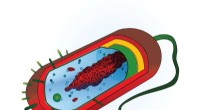
* Simple: They lacked a nucleus and other membrane-bound organelles found in more complex cells.
* Microscopic: They were extremely small, typically only a few micrometers in diameter.
* Anaerobic: They did not require oxygen to survive and likely thrived in a harsh, oxygen-free environment.
* Likely chemoautotrophs: They obtained energy from inorganic chemical reactions rather than sunlight, like modern-day extremophiles.
These early prokaryotes were the ancestors of all life on Earth, and their evolution paved the way for the development of more complex organisms over billions of years.