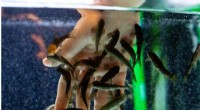
1. Observation:
* Careful observation: Scientists start by meticulously observing the world around them, paying close attention to patterns, behaviors, and phenomena. This can be done through direct observation in the field or lab, or by analyzing data collected by others.
* Identifying questions: Observations often spark questions about how things work or why they behave in a particular way.
2. Hypothesis:
* Formulating a testable explanation: Scientists use their observations and existing knowledge to propose a possible explanation for what they observe. This explanation is called a hypothesis.
* Predicting outcomes: A good hypothesis can lead to testable predictions about what might happen under specific conditions.
3. Experimentation:
* Designing controlled experiments: Scientists design experiments to test their hypotheses. They carefully control variables to isolate the effects of the factor they are investigating.
* Collecting data: Experiments generate data, which can be quantitative (numbers) or qualitative (descriptions). This data is carefully recorded and analyzed.
4. Analysis:
* Interpreting data: Scientists analyze the data to see if it supports or contradicts their hypothesis. They use statistical methods to determine the significance of their results.
* Drawing conclusions: Based on the analysis, scientists draw conclusions about their hypothesis and its implications.
5. Communication and Peer Review:
* Sharing results: Scientists share their findings with the scientific community through publications, conferences, and presentations.
* Peer review: Other scientists evaluate the methodology, data, and conclusions of the research to ensure its quality and validity.
6. Revision and Iteration:
* Repeating experiments: Scientific findings are often tested and retested by other researchers to ensure reliability and consistency.
* Developing new hypotheses: New findings can lead to further research and the development of new hypotheses to explore.
Important aspects of scientific inquiry:
* Empiricism: Science relies on evidence gathered through observation and experimentation.
* Objectivity: Scientists strive to remain unbiased and objective in their research.
* Skepticism: Scientists question assumptions and critically evaluate evidence.
* Collaboration: Science is a collaborative effort, with scientists sharing ideas and building upon each other's work.
This process of observation, experimentation, and analysis forms the foundation of the scientific method, which allows scientists to understand and explain the natural world, including how things work and how they affect each other.