Key Differences:
* Structure and Organization:
* Dead organisms: Possess a once-organized structure (cells, tissues, organs) that has begun to break down. The organization may be fragmented or altered, but traces of the original structure remain.
* Non-living objects: Lack any cellular structure or signs of previous organization. They are usually uniform in composition.
* Chemical Composition:
* Dead organisms: Contain complex organic molecules (proteins, carbohydrates, lipids, nucleic acids) that were essential for life. These molecules degrade over time.
* Non-living objects: Typically lack complex organic molecules and often have simpler, inorganic compositions.
* Historical Context:
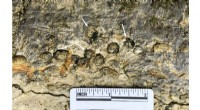
* Dead organisms: May have evidence of past life, such as fossils, remnants of decay, or a history of growth and development.
* Non-living objects: Lack any evidence of biological processes or a history of life.
* Complexity and Variability:
* Dead organisms: Exhibit a higher degree of complexity and variability due to their past biological processes. Even in decay, they show traces of the once intricate systems.
* Non-living objects: Generally have simpler structures and less variability, as they are not influenced by biological factors.
Examples:
* Dead organism: A fallen leaf, a dead animal, a fossilized bone.
* Non-living object: A rock, a piece of plastic, a grain of sand.
Challenges:
* Incomplete Decomposition: In some cases, it might be difficult to distinguish between a very decomposed organism and a non-living object if the remaining organic matter is minimal.
* Complex Artifacts: Human-made objects that mimic biological structures, such as sculptures or models, can sometimes be challenging to classify.
Scientific Tools:
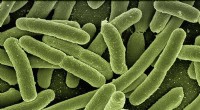
* Microscopy: Examining samples under a microscope can reveal the presence of cellular structures or remnants of biological processes.
* Chemical analysis: Identifying specific organic molecules, such as proteins or DNA, can be a strong indicator of a dead organism.
* Dating techniques: Radiocarbon dating or other methods can establish the age of an object, potentially indicating its past biological activity.
Ultimately, the process of determining whether something was alive or not often involves a combination of observation, scientific analysis, and a consideration of the object's history.