1. Observation and Data Collection Tools:
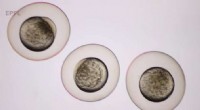
* Microscopes: Used to view tiny objects and structures, essential in fields like biology and materials science.
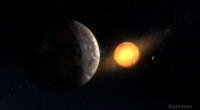
* Telescopes: Used to view distant objects in space, crucial for astronomy and astrophysics.
* Spectrometers: Analyze light to determine the composition of materials, used in chemistry, physics, and astronomy.
* Sensors: Detect and measure various physical quantities like temperature, pressure, light, and sound.
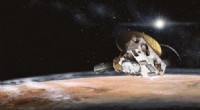
* Satellites: Gather data from space, used in many fields including Earth science, meteorology, and climate research.
* Field Equipment: Used to collect data in the field, such as thermometers, rain gauges, compasses, and GPS devices.
2. Experimentation and Analysis Tools:
* Laboratory Equipment: Includes glassware, beakers, flasks, pipettes, centrifuges, incubators, and more, used for controlled experiments.
* Computers: Powerful tools for data analysis, modeling, simulations, and communication.
* Software: Used for data analysis, visualization, statistical analysis, and simulations.
* Reactors: For controlled chemical reactions and processes.
* Analytical Instruments: Gas chromatographs, mass spectrometers, and X-ray diffractometers used to identify and analyze compounds.
3. Communication and Collaboration Tools:
* Scientific Journals: Publications where scientists share their research findings with the scientific community.
* Conferences: Gatherings of scientists to present and discuss their work.
* Collaboration Platforms: Online tools for sharing data, collaborating on research projects, and communicating with other scientists.
* Presentation Software: Used for presenting research findings at conferences and meetings.
4. Other Important Tools:
* Mathematical Tools: Statistics, calculus, and other mathematical concepts are essential for analyzing data and making predictions.
* Logic and Critical Thinking: Scientists use logic and critical thinking to analyze data, develop hypotheses, and draw conclusions.
* Creativity and Imagination: Scientists need creativity and imagination to come up with new ideas and solve problems.
Remember, this is just a glimpse into the vast array of tools used in science. The specific tools used will vary greatly depending on the field of research, the type of experiment, and the specific research question being investigated.