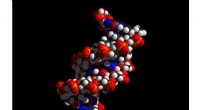
1. The amount of adenine (A) is always equal to the amount of thymine (T) in DNA.
2. The amount of guanine (G) is always equal to the amount of cytosine (C) in DNA.
Significance of Chargaff's Rules:
* Base Pairing: These rules strongly suggested that adenine and thymine, as well as guanine and cytosine, pair up to form the building blocks of DNA. This was a critical piece of information that later helped Watson and Crick determine the double helix structure of DNA.
* Complementary Base Pairing: The 1:1 ratio of A:T and G:C indicated a complementary base pairing pattern, meaning that the sequence of one strand of DNA dictates the sequence of its complementary strand.
* Genetic Code: Chargaff's Rules provided evidence for the mechanism of DNA replication and how genetic information is passed from one generation to the next.
Impact on DNA Structure:
While Chargaff's Rules didn't directly reveal the double helix structure, they were essential in:
* Eliminating incorrect models: Models that didn't account for these base pairing ratios were disproven.
* Guiding the discovery: Chargaff's data provided a framework for Watson and Crick to build their accurate model of DNA structure.
In essence, Chargaff's Rules provided the crucial foundation for understanding the complementary nature of DNA base pairing, which ultimately led to the discovery of the double helix structure of DNA.