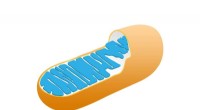
* Lack of Mitochondria: Pelomyxa palustris is unique in that it lacks mitochondria, the powerhouses of eukaryotic cells. This has led some to believe it represents an early stage in eukaryotic evolution. However, it's more likely that Pelomyxa lost its mitochondria through secondary loss, a process where an organism loses a feature that was present in its ancestors.
* Presence of Bacteria: Instead of mitochondria, Pelomyxa contains symbiotic bacteria that perform many of the functions mitochondria usually do. This suggests that Pelomyxa evolved its unique energy system after branching off from other eukaryotes, not before.
* Evolutionary Complexity: The evolutionary history of eukaryotes is complex and involves multiple lineages branching off from a common ancestor. It's difficult to identify a single "most primitive" organism.
* Lack of a Definitive "Primitive" State: The concept of "primitive" can be misleading. Organisms don't necessarily become more complex over time. Evolution is not a linear progression, but a branching process where different lineages adapt to their environments in unique ways.
Therefore, while Pelomyxa palustris is certainly an interesting and unique organism, it's not necessarily the most primitive eukaryote. Its lack of mitochondria might be a derived trait, not a primitive one.
Instead of focusing on "primitiveness", it's more accurate to consider Pelomyxa as an example of how evolutionary processes can lead to diverse and fascinating adaptations, even in seemingly simple organisms.