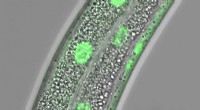
Chloroplasts are the organelles responsible for photosynthesis in plant cells. They are characterized by a complex structure with distinct features that enable them to carry out this essential process. Here are some key features of chloroplasts:
1. Double Membrane:
* Chloroplasts are enclosed by two membranes, an outer and an inner membrane.
* The outer membrane is permeable to small molecules, while the inner membrane is selectively permeable, regulating the passage of molecules.
2. Thylakoid System:
* Inside the inner membrane lies a complex system of interconnected flattened sacs called thylakoids.
* Thylakoids are stacked into structures called grana (singular: granum).
* The space between the thylakoid membranes is called the thylakoid lumen.
3. Stroma:
* The space between the inner membrane and the thylakoid membrane is called the stroma.
* It contains enzymes, DNA, ribosomes, and other components necessary for photosynthesis.
4. Pigments:
* Chloroplasts contain pigments, primarily chlorophyll a and chlorophyll b, which absorb light energy for photosynthesis.
* Other pigments, like carotenoids, also play a role in light absorption and protection from excess light.
5. Photosystems:
* Within the thylakoid membrane are embedded photosystems I and II, which are complexes of proteins and pigments involved in capturing light energy and converting it into chemical energy.
6. ATP Synthase:
* The thylakoid membrane contains ATP synthase, an enzyme complex that generates ATP (adenosine triphosphate), the main energy currency of cells, using the proton gradient generated across the membrane during photosynthesis.
7. DNA and Ribosomes:
* Chloroplasts have their own DNA (circular) and ribosomes, allowing them to synthesize some of their own proteins. This suggests an evolutionary origin from prokaryotic cells.
8. Movement:
* Chloroplasts are capable of moving within the cell, often moving towards light sources to optimize photosynthesis.
9. Reproduction:
* Chloroplasts reproduce by division, creating more chloroplasts within the cell.
Key functions of chloroplasts:
* Photosynthesis: Capture light energy and convert it into chemical energy (glucose) and oxygen.
* Production of ATP: Generate ATP using the proton gradient created during photosynthesis.
* Synthesis of organic molecules: Produce sugars, amino acids, and other organic molecules needed for plant growth.
* Storage of starch: Store excess glucose as starch for later use.
* Regulation of plant development: Contribute to plant development by producing signaling molecules.
These features and functions make chloroplasts essential for plant life and ultimately contribute to the entire ecosystem by providing the foundation for food webs through photosynthesis.