* Fossils: Fossils provide a record of life on Earth over millions of years. They show a gradual change in organisms over time, with simpler life forms appearing earlier and more complex forms appearing later. This supports the idea of gradual change and evolution.
* Modern organisms: The diversity of life on Earth today, with its many different species, can be explained by the process of evolution. Organisms share common ancestors, but over time they have evolved to adapt to different environments.
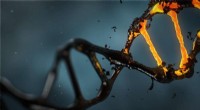
* Genetic changes: Evolution is driven by changes in the genetic material of organisms. These changes can be caused by mutations, which are random changes in the DNA sequence.
* Inheritance: Beneficial mutations can be passed down to offspring, giving them a better chance of survival and reproduction. This means that genetic changes are inherited by later generations.
Here's how these points connect:
1. Fossils demonstrate change over time: This suggests that organisms are not fixed but change over generations.
2. Modern organisms show diversity: This diversity is a result of these changes accumulating over time.
3. Genetic changes are the source of variation: These changes create new traits that can be advantageous or disadvantageous in a particular environment.
4. Inherited changes lead to evolution: Beneficial changes are passed down, allowing populations to adapt and evolve over generations.
Therefore, fossils and modern organisms provide evidence for the concept of evolution by natural selection, which is based on the idea that genetic changes are inherited by later generations.