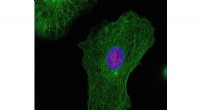
* Somatic cells: These are all the cells in the body that are not gametes (sex cells). Examples include skin cells, muscle cells, nerve cells, and blood cells.
* Some specialized cells: Some cells that normally don't divide, like nerve cells, can sometimes undergo mitosis for repair purposes.
Mitosis does not occur in:
* Gametes (sex cells): These cells undergo meiosis, which is a different type of cell division that produces haploid cells (with half the number of chromosomes).
* Prokaryotic cells: These cells lack a nucleus and divide by a process called binary fission.
In summary, mitosis is a fundamental process for the growth and repair of tissues in multicellular organisms.