Here's a breakdown:
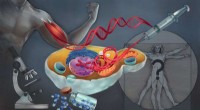
* Recombinant DNA is formed by combining DNA from different sources, often different species.
* This process involves isolating and cutting specific DNA sequences, then joining them together with the DNA from another organism.
* The resulting molecule is then inserted into a host organism, usually a bacterium or yeast, where it can be replicated and expressed.
Here's an example:
* Imagine we want to produce human insulin in bacteria.
* We would isolate the human gene for insulin and cut it out using restriction enzymes.
* Then, we'd insert that gene into a bacterial plasmid (a small circular DNA molecule), forming a recombinant DNA molecule.
* This plasmid can then be inserted into bacteria, which will now produce human insulin.
In summary, recombinant DNA is a powerful tool that allows scientists to:
* Study gene function.
* Produce valuable proteins like insulin.
* Develop new vaccines and therapies.
* Improve crops and livestock.
Let me know if you'd like to explore any of these applications in more detail!