Here's a breakdown:
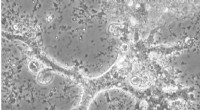
* Endocytosis: This is a cellular process where the plasma membrane folds inwards, encloses a substance or particle, and then pinches off to form a vesicle that carries the material into the cell's interior.
Types of endocytosis:
* Phagocytosis: "Cell eating" where large particles like bacteria or cellular debris are engulfed.
* Pinocytosis: "Cell drinking" where the cell takes in fluids and dissolved solutes.
* Receptor-mediated endocytosis: This is a specific form where the cell uses receptors on its surface to bind to specific molecules, triggering the formation of an invagination and subsequent vesicle formation.
Mechanism of invagination:
* The plasma membrane is a flexible structure composed of a phospholipid bilayer.
* Specific proteins and lipids within the membrane contribute to the formation of invaginations.
* The process often requires energy (ATP) and the involvement of cytoskeletal components like actin filaments.
* These elements work together to deform the membrane, creating the inward fold.
Why is it active?
Endocytosis is considered an active process because it requires energy expenditure. It involves the coordinated action of proteins and other cellular machinery to move substances against their concentration gradient, bringing them into the cell.
Let me know if you'd like more detail on any of these aspects!