Here's why:
* Traditional Kingdoms: The traditional five-kingdom system (Monera, Protista, Fungi, Plantae, Animalia) was based on visible characteristics. This system placed all prokaryotes (bacteria and archaea) into the kingdom Monera. However, this classification is outdated and doesn't reflect their evolutionary distinctness.
* Three-Domain System: The modern understanding of life is based on the three-domain system. This system recognizes three primary lineages: Bacteria, Archaea, and Eukarya.
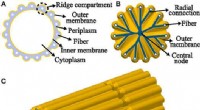
* Bacteria and Archaea are both prokaryotic (lacking a nucleus and membrane-bound organelles).
* Eukarya includes all organisms with eukaryotic cells (having a nucleus and membrane-bound organelles), such as protists, fungi, plants, and animals.
Therefore, there isn't a single "kingdom" that encompasses all prokaryotes.
Instead, we talk about two distinct domains: Bacteria and Archaea, each containing a vast diversity of prokaryotic life.