Here's why:
* Selective permeability: The cell membrane acts as a barrier, controlling what enters and exits the cell. It's selectively permeable, meaning it allows some substances to pass through while blocking others.
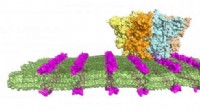
* Phospholipid bilayer: The cell membrane is composed of a phospholipid bilayer, which forms a barrier between the internal and external environments.
* Transport proteins: Embedded within the membrane are various transport proteins, each designed to move specific substances across the membrane. This includes:
* Passive transport: Movement of substances down their concentration gradient (from high to low concentration) without requiring cellular energy. Examples include diffusion, osmosis, and facilitated diffusion.
* Active transport: Movement of substances against their concentration gradient (from low to high concentration), requiring cellular energy (ATP).
In summary: The cell membrane is the primary regulator of the chemical environment within a cell, ensuring the appropriate balance of substances needed for survival and proper function.