1. Anatomy and Morphology:
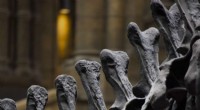
* Shape and Structure: Fossils reveal the external and internal structure of the organism, including bones, shells, teeth, leaves, and even soft tissues in rare cases. This helps us understand the organism's body plan, how it moved, and what it might have eaten.
* Size and Proportions: Fossils allow us to determine the size of the organism and the proportions of its body parts. This information helps us understand how the organism evolved and adapted to its environment.
* Traces of Behavior: Fossils can sometimes preserve traces of behavior, such as footprints, burrows, nests, and even coprolites (fossilized dung). These traces give us insights into how the organism lived and interacted with its environment.
2. Evolutionary Relationships:
* Lineage and Ancestry: By comparing fossils from different time periods, we can trace the evolutionary history of different species and identify their common ancestors. This helps us understand how life on Earth has changed over time.
* Adaptive Radiation: Fossil records often reveal periods of rapid diversification, where a single ancestor gives rise to a variety of new species adapted to different ecological niches.
3. Environmental Information:
* Climate and Habitat: Fossils can reveal information about the climate and habitat in which the organism lived. For example, the presence of certain types of plants and animals can indicate the presence of freshwater, saltwater, or terrestrial environments.
* Past Ecosystems: Fossils from different types of organisms found together can help us reconstruct past ecosystems, including the types of plants and animals that lived in a particular area and how they interacted.
4. Extinction Events:
* Causes and Effects: The fossil record provides evidence of past extinction events, such as the Permian-Triassic extinction, which killed off 96% of marine species. Studying these events helps us understand the causes of extinctions and their impacts on life on Earth.
* Timing and Rates: Fossils allow us to date the timing of extinction events and determine the rate at which species disappeared.
Limitations of Fossils:
It's important to note that the fossil record is incomplete. Not all organisms are preserved as fossils, and even those that are preserved may be incomplete or damaged. This means that our understanding of past life is based on a limited amount of information.
In summary, fossils provide us with a window into the past, offering invaluable information about the evolution, anatomy, behavior, and environment of extinct organisms. By studying fossils, we gain a deeper understanding of life on Earth and its incredible history.