1. Adaptation to Changing Environments:
* Beneficial mutations can confer resistance to diseases or environmental stresses. For example, a mutation in a gene responsible for melanin production could help an organism thrive in a harsher environment with increased UV radiation.
* Mutations can enhance an organism's ability to utilize new resources. A mutation enabling an organism to digest a previously unusable food source could open up a new niche and provide a competitive advantage.
2. Enhanced Fitness:
* Mutations can lead to the development of new traits that increase an organism's fitness. This could include faster running speed, improved camouflage, or stronger immune defenses.
* These advantageous traits can increase an organism's chances of survival and reproduction. This leads to increased chances of passing on these beneficial mutations to offspring.
3. Evolutionary Innovation:
* Mutations are the raw material for evolution. Over long periods, beneficial mutations can accumulate within a population, driving the development of new species and biodiversity.
* They enable organisms to adapt to changing conditions and diversify life on Earth.
Examples of Beneficial Mutations:
* Lactose Tolerance: A mutation allowing adults to digest lactose (milk sugar) has been beneficial in populations that rely on dairy products.
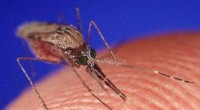
* Sickle Cell Anemia: While the homozygous form of this mutation is harmful, the heterozygous form provides resistance to malaria, making it beneficial in regions where malaria is prevalent.
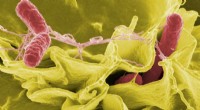
* Antibiotic Resistance in Bacteria: While a threat to human health, this mutation is beneficial to the bacteria, enabling them to survive antibiotic treatment.
Important Note:
* The vast majority of mutations are neutral or even harmful.
* Only a small proportion of mutations are beneficial, and their impact depends on the environment and other factors.
* The process of natural selection, where individuals with advantageous mutations are more likely to survive and reproduce, drives the spread of beneficial mutations within a population.