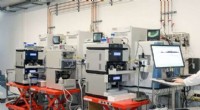
1. Empirical Research: This involves gathering data through observation, experimentation, and measurement.
* Observation: Scientists carefully watch and record phenomena in the natural world. This can involve observing animals in their natural habitat, studying the stars through telescopes, or analyzing geological formations.
* Experimentation: This involves manipulating variables in a controlled environment to test specific hypotheses. Scientists design experiments to isolate and identify the cause-and-effect relationships between different factors.
* Measurement: This involves using instruments and techniques to quantify and record data. Scientists use a wide range of tools, from microscopes to sophisticated imaging techniques, to gather precise measurements.
2. Literature Review and Information Gathering: Scientists rely on existing knowledge and research findings to inform their work.
* Reading Scientific Journals: Scientists read peer-reviewed journals to stay up-to-date on the latest discoveries and research findings in their field.
* Consulting Databases: They use specialized databases to access research papers, patents, and other scientific information.
* Networking and Collaboration: Scientists often collaborate with colleagues and experts in their field, sharing ideas and knowledge.
* Attending Conferences and Workshops: Scientists attend scientific meetings to present their research, learn about new findings, and network with other researchers.
Key Principles Guiding Information Gathering:
* Objectivity: Scientists strive to be impartial and unbiased in their observations and data analysis.
* Replicability: Scientific findings should be reproducible by other researchers using the same methods.
* Falsifiability: Scientific hypotheses should be testable and capable of being proven false.
Specific Examples:
* Biologists might use microscopes to study cells, conduct field studies to observe animal behavior, or conduct laboratory experiments to test the effectiveness of a new drug.
* Astronomers use telescopes to observe distant galaxies, analyze light spectra to determine the composition of stars, and develop computer models to simulate celestial events.
* Chemists might use spectroscopy to identify chemical compounds, conduct reactions to synthesize new materials, or perform simulations to predict chemical properties.
By combining these methods, scientists gather information, test hypotheses, and develop a deeper understanding of the world around us.