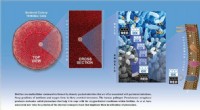
The growth of porphyroblasts is a complex process that is still not fully understood. However, it is thought that several factors are involved, including the nucleation of new crystals, the growth of existing crystals, and the dissolution of other minerals.
Nucleation is the process by which new crystals form. This can occur when the temperature and pressure of the rock are increased, or when the chemical composition of the rock is changed. For example, the addition of water to a rock can cause the formation of new minerals, such as quartz and feldspar.
Growth is the process by which existing crystals increase in size. This can occur when the surrounding minerals are dissolved, or when the temperature and pressure of the rock are increased.
Dissolution is the process by which minerals are broken down and removed from the rock. This can occur when the temperature and pressure of the rock are decreased, or when the chemical composition of the rock is changed.
The growth of porphyroblasts is a delicate balance between these three processes. If the temperature and pressure of the rock are too high, the crystals will grow too quickly and become unstable. If the temperature and pressure of the rock are too low, the crystals will not grow at all.
Porphyroblasts are important because they can provide information about the conditions under which a rock was formed. For example, the size and shape of porphyroblasts can be used to estimate the temperature and pressure of the rock during metamorphism. Porphyroblasts can also be used to identify the different stages of metamorphism.