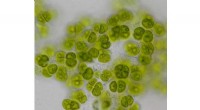
* Both are unicellular organisms. This means that they are made up of only one cell.
* Both are protists. Protists are a diverse group of organisms that include algae, protozoa, and slime molds.
* Both are heterotrophic. This means that they must get their food from other organisms.
* Both are motile. This means that they can move around on their own.
Spirogyra
* Spirogyra is a multicellular organism. This means that it is made up of many cells.
* Spirogyra is a plant. Plants are organisms that can make their own food through the process of photosynthesis.
* Spirogyra is autotrophic. This means that it does not need to get its food from other organisms.
* Spirogyra is non-motile. This means that it cannot move around on its own.
Comparison of Amoeba, Paramecium, and Spirogyra
| Characteristic | Amoeba | Paramecium | Spirogyra |
|---|---|---|---|
| Number of cells | One | One | Many |
| Type of organism | Protist | Protist | Plant |
| Nutritional type | Heterotrophic | Heterotrophic | Autotrophic |
| Motility | Motile | Motile | Non-motile |