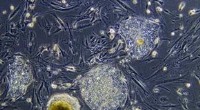
For example, nerve cells are long and thin, which allows them to transmit electrical signals over long distances. Muscle cells are long and cylindrical, which allows them to contract and relax. White blood cells are amoeboid, which allows them to move around and engulf foreign particles.
The size and shape of cells are also influenced by their environment. For example, cells that grow in a crowded environment are often smaller than cells that grow in a less crowded environment. Cells that are exposed to mechanical stress are often larger and more rounded than cells that are not exposed to mechanical stress.
The variation in cell size and shape is one of the things that makes life on Earth so diverse.