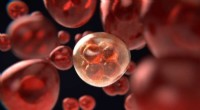
1. Nutrient Limitation: Cells may limit the availability of essential nutrients to their bacterial symbionts, thereby controlling their growth and population. By restricting access to certain nutrients, cells can prevent the symbionts from overgrowing and disrupting the host's cellular functions.
2. Effector Molecules: Cells can produce effector molecules, which are small molecules or proteins that specifically target and interfere with the functions of bacterial symbionts. These effector molecules can disrupt bacterial cell division, inhibit gene expression, or alter metabolic pathways, ultimately controlling the behavior and population of the symbionts.
3. Host Immune Response: Cells can activate immune responses to target and eliminate excessive or harmful bacterial symbionts. Specialized immune cells, such as phagocytes, can engulf and destroy bacteria, limiting their numbers and preventing the development of infections or dysbiosis.
4. Quorum Sensing Disruption: Some cells interfere with the quorum sensing mechanisms of their bacterial symbionts. Quorum sensing is a cell-to-cell communication process that allows bacteria to coordinate their behavior and gene expression based on population density. By disrupting this communication, cells can prevent the symbionts from reaching a critical threshold that would trigger certain detrimental behaviors or virulence factors.
5. Genetic Manipulation: In some cases, cells may have evolved genetic mechanisms to directly control the expression of specific genes within their bacterial symbionts. These genetic modifications can alter the behavior, metabolism, or virulence of the bacteria, ensuring their alignment with the host's needs.
6. Physical Barriers: Cells can develop physical barriers, such as specialized membrane structures or protective coatings, to control the interactions with their bacterial symbionts. These barriers can restrict the access of bacteria to host nutrients or prevent the spread of potentially harmful substances into the host's cytoplasm.
It's important to note that the mechanisms employed by cells to control their bacterial symbionts are diverse and can vary across different host-symbiont associations. These mechanisms have evolved over time through co-evolutionary processes and are crucial for maintaining symbiotic homeostasis and the overall health of the host organism.