The lungless frog has been studied for decades and was believed to be the only frog species without lungs. This unique characteristic made it an intriguing subject for researchers, who sought to understand how it survived without the essential organ responsible for gas exchange.
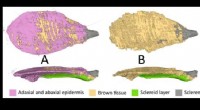
However, recent advancements in imaging technology have enabled scientists to take a closer look at the lungless frog and reveal a hidden truth. Using high-resolution micro-CT scans, the biologists found that *Sylvicola thorectes* does indeed possess rudimentary lungs, albeit greatly reduced in size compared to other frogs.
The discovery of these vestigial lungs raises questions about the evolutionary pathway that led to the reduction of lungs in this species. It is possible that *Sylvicola thorectes* evolved from a lunged ancestor that adapted to a specific ecological niche, where breathing through the skin was sufficient for survival. Over time, natural selection may have favored individuals with smaller lungs, allowing them to better exploit their environment.
The presence of these rudimentary lungs also challenges the current understanding of lung development in amphibians. Traditionally, it was assumed that lungs developed once during vertebrate evolution, and the lungless frogs were thought to have secondarily lost their lungs. However, the discovery of vestigial lungs in *Sylvicola thorectes* suggests that lung evolution may be more complex and involve both gains and losses throughout evolutionary history.
Furthermore, this finding highlights the importance of technological advancements in advancing scientific knowledge. The use of advanced imaging techniques enabled researchers to uncover hidden structures and gain a deeper understanding of species biology.
In conclusion, the discovery that the lungless frog does have lungs challenges long-held beliefs and opens new avenues for research into amphibian evolution and the intricate mechanisms of organ development and adaptation.