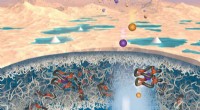
The secretory pathway is a cellular process by which proteins are transported from the endoplasmic reticulum (ER) to the extracellular environment. In the case of IGF2, it is secreted through a process called unconventional protein secretion (UPS), which does not involve the conventional ER-Golgi-plasma membrane pathway.
The researchers found that MuSCs treated with IGF2 secreted through UPS showed increased differentiation compared to those treated with IGF2 secreted through the conventional pathway. Further analysis revealed that the UPS-mediated secretion of IGF2 led to the activation of the extracellular signal-regulated kinase (ERK) signaling pathway, which is crucial for MuSC differentiation.
To confirm the role of ERK signaling in IGF2-mediated MuSC differentiation, the researchers used a specific inhibitor of ERK and observed that it blocked the differentiation of MuSCs treated with IGF2 secreted through UPS. This indicates that ERK signaling is essential for the differentiation-promoting effects of UPS-secreted IGF2.
Furthermore, the researchers identified a specific cargo receptor protein, sortilin, that is involved in the UPS-mediated secretion of IGF2. They found that the interaction between IGF2 and sortilin is crucial for the differentiation-promoting effects of IGF2.
In summary, this study demonstrates that the secretory pathway of IGF2 plays a critical role in mediating MuSC differentiation. The UPS-mediated secretion of IGF2 promotes MuSC differentiation by activating the ERK signaling pathway and requires the involvement of the cargo receptor protein sortilin. Understanding these mechanisms could provide new insights for developing therapeutic strategies to enhance muscle regeneration and repair in conditions such as muscle injuries and muscular dystrophies.