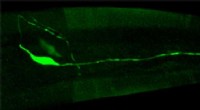
Scientists have developed a new imaging method that allows them to see how cells work in real time. The technique, called lattice light-sheet microscopy (LLSM), uses a sheet of light to illuminate a thin section of a cell, and then captures images of the cell as it moves through the light sheet. This allows researchers to see how the cell's structure and function change over time.
LLSM is a major breakthrough in cell imaging because it allows scientists to see the inner workings of cells without having to destroy them. This will make it possible to study cellular processes in much greater detail, and could lead to new insights into the causes of diseases such as cancer and Alzheimer's.
How does LLSM work?
LLSM works by using a sheet of light to illuminate a thin section of a cell. The light sheet is created by passing a laser beam through a cylindrical lens. The lens focuses the beam into a thin line, which is then spread out into a sheet by a second lens.
The cell is placed in a chamber that is filled with water. The light sheet passes through the water and illuminates the cell. The light that is scattered by the cell is collected by a microscope objective and focused onto a camera.
The camera captures images of the cell as it moves through the light sheet. This allows researchers to see how the cell's structure and function change over time.
What are the advantages of LLSM?
LLSM has several advantages over other cell imaging methods. First, it is non-invasive, meaning that it does not damage cells. Second, it allows researchers to image cells in real time. Third, it provides a high-resolution view of the cell's interior.
These advantages make LLSM a powerful tool for studying cellular processes. It is expected to lead to new insights into the causes of diseases such as cancer and Alzheimer's.
Applications of LLSM
LLSM is being used to study a wide variety of cellular processes, including:
* Cell division
* Protein synthesis
* Organelle function
* Cell migration
* Cell signaling
LLSM is also being used to develop new drugs and treatments for diseases. By understanding how cells work, scientists can design drugs that target specific cellular processes. This could lead to new treatments for diseases that are currently incurable.
LLSM is a promising new technology that has the potential to revolutionize cell biology. It is expected to lead to new insights into the causes of diseases and the development of new drugs and treatments.