There are many different types of AFPs, and they vary in their ability to inhibit ice growth. Some AFPs are very effective at preventing ice crystal growth, while others are less effective. The reasons for these differences are not fully understood, but they are thought to be related to the structure of the AFPs and their interactions with water molecules.
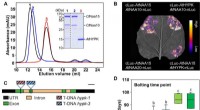
In a recent study, researchers used fluorescence microscopy to investigate the interactions between AFPs and water molecules. They found that AFPs that were more effective at inhibiting ice growth were also more effective at binding to water molecules. This suggests that the ability of AFPs to inhibit ice growth is related to their ability to bind to water molecules and prevent them from forming ice crystals.
The findings of this study provide new insights into the mechanisms by which AFPs inhibit ice growth. This information could be used to design new AFPs that are even more effective at preventing ice crystal growth.
Benefits of using fluorescence microscopy to study AFPs
Fluorescence microscopy is a powerful tool for studying the interactions between AFPs and water molecules. It allows researchers to visualize the proteins and water molecules in real time, and to track their movements. This information can be used to understand how AFPs work and to design new AFPs that are even more effective at preventing ice crystal growth.
Some of the benefits of using fluorescence microscopy to study AFPs include:
* Real-time visualization: Fluorescence microscopy allows researchers to see the proteins and water molecules in real time. This information can be used to track the movements of the proteins and water molecules and to understand how they interact with each other.
* High resolution: Fluorescence microscopy can provide high-resolution images of the proteins and water molecules. This information can be used to see the details of the protein structure and to understand how it interacts with water molecules.
* Sensitivity: Fluorescence microscopy is a very sensitive technique. This means that it can detect even small amounts of proteins and water molecules. This information can be used to study the interactions between AFPs and water molecules at very low concentrations.
Fluorescence microscopy is a valuable tool for studying the interactions between AFPs and water molecules. It can provide researchers with real-time, high-resolution, and sensitive information about these interactions. This information can be used to understand how AFPs work and to design new AFPs that are even more effective at preventing ice crystal growth.