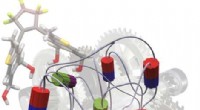
Robustness: Cells exhibit robustness in their cellular processes, allowing them to function effectively despite environmental variations. This resilience is achieved through redundancy, where multiple components can perform similar functions, and feedback loops that maintain homeostasis.
Adaptation and Homeostasis: Cells have adaptive mechanisms that allow them to adjust their behavior and metabolism in response to changing conditions. For example, they can modify gene expression or engage in metabolic rewiring to cope with environmental stressors.
Noise and Stochasticity: Cells also tolerate a certain level of noise and stochasticity in their internal processes. Random fluctuations in gene expression or protein-protein interactions can be managed by cellular regulatory mechanisms to maintain overall cellular function.
Error Correction and Proofreading: Many cellular processes involve error correction mechanisms to ensure accurate information transmission and molecular synthesis. For example, DNA polymerases possess proofreading capabilities to correct errors during DNA replication, reducing the frequency of mutations.
Cellular Communication and Signaling: Cells communicate with each other and sense external cues through signaling pathways, which allows them to coordinate responses and adapt to changes in the environment. This enables cells to respond to specific conditions and make informed decisions accordingly.
Evolution and Natural Selection: Over long evolutionary timescales, cells and organisms can adapt to uncertain and fluctuating environments through natural selection. Beneficial traits that enhance survival and reproduction become more prevalent in the population, enabling species to cope with uncertainties in their environment.
It's worth noting that the ability of cells to deal with uncertainty is crucial for their survival and function. Understanding how cells cope with uncertain environments is essential for fields such as biology, medicine, and biotechnology.