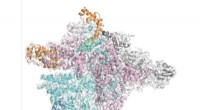
The breakthrough, published in the journal Nature, reveals that a tiny molecule called florigen is responsible for triggering the flowering process.
Florigen is produced in the leaves of plants in response to changes in day length and temperature. When the days get longer and the nights get warmer, florigen levels increase and the plant begins to flower.
This discovery could have a major impact on agriculture, as it could allow farmers to control the flowering time of crops. This would enable them to produce crops at specific times of the year, or to avoid frost damage by delaying flowering until the weather is warmer.
It could also lead to new ways to breed plants that are more resistant to pests and diseases. By understanding the genetic mechanisms that control flowering, scientists could develop plants that are less likely to be affected by these problems.
"This is a really exciting discovery," said Professor George Coupland, one of the lead researchers on the study. "It opens up new possibilities for controlling plant growth and development, and could have a major impact on agriculture."
The discovery was made by a team of scientists from the University of Cambridge and the John Innes Centre. They used a combination of genetic and biochemical techniques to identify florigen and determine its role in flowering.
"We are delighted to have made this discovery," said Professor Dame Ottoline Leyser, another lead researcher on the study. "It is a testament to the power of basic research, and we are excited to see how it can be used to improve crop production."