So, how do cells follow these chemical trails?
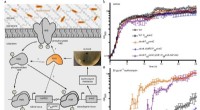
One way is through a process called chemotaxis. In chemotaxis, cells sense chemical gradients and move towards the source of the chemical. This ability to move towards higher or lower concentrations of chemicals is mediated by specific receptors on the cell surface. These receptors bind to the chemical molecules, causing the cell to alter its movement in response. For example, if a cell detects a higher concentration of a growth factor in one direction, it will move towards that direction.
Another mechanism for following chemical trails is through contact guidance. In contact guidance, cells move along the surface of other cells or extracellular matrix proteins. These structures act as physical guides for cell movement, and cells can follow them towards or away from the source of the chemical.
Through these and other mechanisms, cells can follow chemical trails to navigate their environment with great precision. This is essential for many biological processes, including embryonic development, wound healing, and immune responses.
By manipulating chemical trails, scientists can also control the movement of cells in the lab. This has applications in tissue engineering, regenerative medicine, and cancer research. For instance, in tissue engineering, cells can be guided to form desired tissue structures by providing specific chemical cues. In regenerative medicine, growth factors can be used to attract cells to damaged tissues to promote healing. Similarly, in cancer research, understanding how cells follow chemical trails can help identify new targets for cancer therapy.