A team of engineers at the Massachusetts Institute of Technology (MIT) has discovered how tiny proteins inside cells generate the force needed to walk. The finding could lead to new ways to treat diseases that affect cell movement, such as cancer and immune disorders.
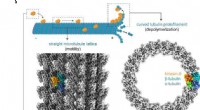
The proteins, called myosins, are motor proteins that convert chemical energy into mechanical energy. They do this by binding to actin filaments, which are long, thin fibers that form the cytoskeleton of cells. When myosins bind to actin, they undergo a conformational change that causes them to pull the actin filament toward them. This generates the force that allows cells to move.
The MIT team, led by Professor of Mechanical Engineering James Spudich, used a combination of experimental and computational techniques to study how myosins generate force. They found that the force is generated by a small, positively charged region of the myosin head. This region interacts with negatively charged residues on the actin filament, creating an electrostatic attraction that pulls the actin filament toward the myosin.
The team also found that the force generated by myosins is regulated by a small protein called calmodulin. Calmodulin binds to myosin and changes its conformation, which affects the strength of the electrostatic interaction between myosin and actin. This allows cells to control the force generated by myosins and fine-tune their movement.
The MIT team's findings could lead to new ways to treat diseases that affect cell movement. For example, drugs that target the electrostatic interaction between myosin and actin could be used to inhibit cell movement in cancer cells or immune cells that are attacking healthy tissue. Conversely, drugs that enhance the electrostatic interaction between myosin and actin could be used to improve cell movement in diseases such as muscular dystrophy.
"Our findings provide a new understanding of how myosins generate force," says Spudich. "This knowledge could lead to new treatments for a variety of diseases that affect cell movement."
The team's findings were published in the journal Nature Structural & Molecular Biology.