"This discovery could have a significant impact on crop improvement," said study leader Dr. Jian-Kang Zhu, a professor of plant biology at Cornell University. "By understanding how the NAC transcription factors work, we may be able to develop new ways to improve crop performance under challenging environmental conditions."
The NAC transcription factor family is a large group of proteins that are found in all plants. They are involved in a variety of cellular processes, including cell division, differentiation, and apoptosis. However, their role in regulating gene expression in response to environmental stresses was not previously known.
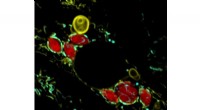
In the study, the researchers used a variety of techniques to investigate the role of the NAC transcription factors in Arabidopsis thaliana, a small flowering plant that is often used as a model organism in plant biology. They found that the NAC transcription factors were expressed at higher levels in plants that were exposed to drought, heat, and salt stress. They also found that the NAC transcription factors regulated the expression of a number of genes that are involved in stress responses.
"These results suggest that the NAC transcription factors play a key role in regulating plant responses to environmental stresses," said Zhu. "This discovery could provide a path to modify crop traits such as drought tolerance and grain yield by manipulating the expression of the NAC transcription factors."
The researchers are now working to identify the specific NAC transcription factors that are involved in regulating gene expression in response to environmental stresses. They also plan to investigate how the NAC transcription factors interact with other proteins and regulatory elements to control gene expression.
"This research is still in its early stages," said Zhu. "However, we are hopeful that it will lead to new ways to improve crop performance under challenging environmental conditions."