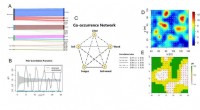
One of the most striking examples of social brains in insect societies is the honeybee. Honeybees live in large colonies, with tens of thousands of individuals. Each bee has its own brain, but the brains of all the bees in the colony are connected through a network of chemical signals. This network allows the bees to share information about food sources, predators, and other important events.
The honeybee brain is also specialized for processing visual information. Honeybees can see colors that humans cannot, and they can use their vision to navigate long distances. They can also learn new visual patterns and associate them with rewards, such as food.
Another example of a social brain in insect societies is the termite. Termites live in large colonies, with millions of individuals. Each termite has its own brain, but the brains of all the termites in the colony are connected through a network of chemical signals. This network allows the termites to share information about food sources, predators, and other important events.
The termite brain is also specialized for processing tactile information. Termites can sense vibrations, and they use their sense of touch to communicate with each other and to navigate their environment.
The social brains of insect societies are a remarkable example of how evolution can produce complex cognitive abilities in animals with relatively small brains. These brains are essential for the survival of insect societies, and they allow these societies to achieve feats that would be impossible for any single individual.