The study, published in the journal Nature Plants, identified a hub of three central genes that act as a master switch to control the timing and number of flowers produced. Understanding this process could lead to increasing the yield of important staple crops such as wheat and rice.
Plants face a constant challenge in balancing growth with the production of flowers and fruit. They must allocate their limited resources between vegetative growth and reproductive structures such as flowers and fruit at just the right time. This trade-off is particularly important for crops, where yield depends on striking a balance between producing sufficient flowers and grain.
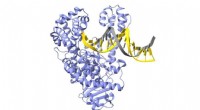
The researchers' search for the genes controlling this balance led them to the SEPALLATA clade of genes, which are known to regulate the development of flower structures in plants. They discovered that a specific protein produced by one of the SEPALLATA genes, SEP3, acts as the hub of a network of genes and signalling pathways that control flowering.
The researchers identified two other genes, FUL and SOC1, which act as master switches alongside SEP3. These genes regulate the production and perception of the plant hormone gibberellin, which stimulates flowering.
To determine the role of SEP3 in the hub network, the researchers developed plants with reduced or elevated levels of the SEP3 protein. Their findings showed that the network was remarkably robust, with plants able to maintain relatively normal levels of flowering under a wide range of SEP3 activity. This suggests that the network has evolved to ensure robust flowering, critical for plant reproduction and crop yields.
Dr Enrico Magnani, a postdoctoral researcher at the John Innes Centre and lead author of the paper, said: "Our study reveals the intricate mechanisms by which plants control flowering time, a trait of utmost importance for plant fitness and crop productivity. By unravelling the molecular mechanisms underpinning this process, we can lay the foundation for developing new strategies to improve crop yield, ensuring food security."
Professor Dame Caroline Dean, a senior group leader at the John Innes Centre and co-author of the study, said: "This discovery of the central SEP3 hub in the regulation of flowering provides an unprecedented opportunity to manipulate plant growth and development for crop improvement. Understanding the genetic basis of these critical processes is a significant step towards developing new tools and technologies for sustainable agriculture."