However, a groundbreaking study, published in the journal Nature Communications, has shed light on this biological enigma. Researchers from the University of California, Berkeley, and Lawrence Berkeley National Laboratory have uncovered the intricate dance of protein molecules as they orchestrate the formation of these crystalline structures.
At the heart of this process lies a protein called S-layer, an essential component of the microbe's outer shell. S-layer proteins exhibit a unique property: they can self-assemble into two different types of crystal structures, hexagonal and square. These structures form a mesmerizing patchwork of hexagonal and square tiles that cover the microbe's entire surface, providing structural integrity and motility.
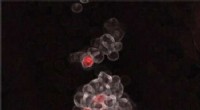
Using a combination of cutting-edge imaging techniques and molecular simulations, the researchers observed the dynamic behavior of S-layer proteins as they assembled into crystals. They found that the proteins spontaneously organized into clusters, much like rafts drifting on a pond, before crystallizing into the hexagonal and square patterns. This process is driven by the proteins' interactions with each other and their surrounding environment.
The researchers identified key molecular interactions that determine the shape of the crystals. For instance, subtle variations in the amino acid sequence of S-layer proteins influence whether they form hexagonal or square crystals. This finding reveals the exquisite precision with which proteins can self-organize based on their molecular composition.
The study not only provides a deeper understanding of the assembly of Methanocaldococcus jannaschii's outer shell but also offers insights into protein crystallization – a phenomenon observed in various biological systems, including the formation of viruses and minerals like calcite.
Moreover, the research has potential implications in nanotechnology and materials science, where the ability to precisely control protein assembly could lead to the design of novel materials and structures with tailored properties.
The discovery of how proteins orchestrate the formation of crystalline tiles underscores the remarkable complexity and elegance of biological systems. It serves as a reminder of nature's brilliance in employing self-assembly processes to create intricate and highly functional structures on the microscopic scale.