The study, published in the journal Nature Communications, found that the size and shape of farmlands, as well as the presence of hedgerows and other natural features, can all play a role in determining how quickly a bee disease spreads through a population.
"Our findings provide new insights into how we can manage agricultural landscapes to reduce the risk of bee disease spread," said lead author Sydney Cameron, a postdoctoral researcher in the Department of Entomology and Nematology at UC Davis. "This is especially important given the vital role that bees play in pollinating crops and supporting biodiversity."
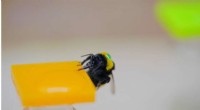
Bees are essential pollinators for many crops, including fruits, vegetables, and oilseeds. However, bees are also susceptible to a variety of diseases, which can cause significant colony losses and economic damage.
One of the most common bee diseases is Nosema ceranae, a fungal disease that can cause bees to become weak and die. Nosema ceranae is spread through contact between bees, and it can be transmitted through shared food or water sources, or through contact with contaminated surfaces.
In their study, Cameron and her colleagues used a mathematical model to simulate the spread of Nosema ceranae through a population of bees in an agricultural landscape. The model took into account the size and shape of farmlands, the presence of hedgerows and other natural features, and the movement patterns of bees.
The results of the model showed that the size and shape of farmlands can have a significant impact on the spread of Nosema ceranae. Larger farmlands were more likely to experience disease outbreaks, and the risk of disease spread was also higher in farmlands that were long and narrow.
The presence of hedgerows and other natural features can help to slow the spread of Nosema ceranae. Hedgerows provide a physical barrier that can prevent bees from moving between farmlands, and they can also provide food and shelter for bees, which can help to improve their overall health and resistance to disease.
"Our findings suggest that we can reduce the risk of bee disease spread by managing agricultural landscapes in ways that create smaller, more irregularly shaped farmlands and incorporate hedgerows and other natural features," said Cameron. "These measures can help to protect bees and ensure the continued sustainability of our food system."
The study was funded by the National Science Foundation, the U.S. Department of Agriculture, and the California Department of Food and Agriculture.