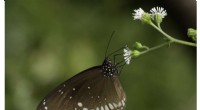
The international team, involving researchers from the University of Cambridge and the Natural History Museum, made their discovery when studying the evolution of Lepidoptera – a group of insects including butterflies and moths.
Repurposing genes has proven a versatile and crucial mechanism for evolution, enabling the diversification and adaptation of life on Earth. However, exactly how this process occurs remains poorly understood. The team’s research, published in the journal Nature Ecology & Evolution, helps shed light on this mystery by detailing the molecular and evolutionary changes underpinning the evolution of a complex trait in a toxic group of caterpillars.
“We were excited to find that the toxic defences of cinnabar moths evolved through the evolution of new molecular interactions between two proteins, enabling the caterpillars to take advantage of plant chemicals,” said lead author Dr Marta Maroja, formerly from Cambridge’s Department of Zoology, and now based at the University of Turku, Finland.
Cinnabar moths (Tyria jacobaeae) are found across much of Europe and Asia. Their caterpillars feed exclusively on the toxic leaves of ragwort plants and sequester the plant chemicals to become unpalatable and subsequently poisonous to potential predators.
Through a combination of laboratory and field experiments, the team first tested the defensive role of the caterpillars’ sequestered toxins. They found that cinnabar moth caterpillars that had fed on ragwort were rejected and avoided by predators, whereas caterpillars reared on plants that lacked defensive chemicals lost their toxic properties and became palatable to predators.
The researchers then used an extensive comparative genomics approach, analysing the genomes and transcriptomes (the set of RNA molecules expressed by the genome) of cinnabar moth caterpillars and several related species. This analysis revealed that the caterpillars’ toxic defence evolved as a consequence of changes within a detoxification pathway that is normally present in the digestive system of all caterpillars.
A gene that is normally involved in the detoxification of plant chemicals in the gut was duplicated in a cinnabar moth ancestor, and the copy was subsequently recruited to the silk glands, which secrete silk used to create their protective cocoons. The caterpillar’s regurgitated silk acts as a defence mechanism, creating an unpleasant foamy secretion covering their body that is toxic to predators.
“Our research not only pinpoints the origins of the toxic defence found in cinnabar moth caterpillars, but also highlights how their ancestor could potentially exploit its toxic diet by repurposing components of its digestive detoxification pathway,” said senior author Dr Mathieu Joron, also from the University of Cambridge’s Department of Zoology, and based at the Natural History Museum, London.
“Evolution is often seen as a process of building intricate new adaptations from scratch. However, our study contributes to a growing body of research that shows how evolution can also act by tweaking existing features, repurposing genes and molecular mechanisms, to produce complex new traits that have fascinating consequences for animals’ ecology,” said Dr Maroja.