Homology: Comparative dental anatomy reveals homologous structures that share a common evolutionary origin. For example, mammals, including humans, have four types of teeth - incisors, canines, premolars, and molars. These teeth are homologous across mammalian species, even though they may vary in size, shape, and function. This homology suggests a shared ancestry and supports the branching patterns of the mammalian evolutionary tree.
Divergence and Adaptation: Teeth can also provide evidence of divergence and adaptation among species. The specific tooth adaptations seen in different groups of animals often reflect their dietary needs and ecological niches. For instance, carnivorous species may have sharp, pointed teeth for grasping and tearing prey, while herbivorous species typically have broad, flat teeth for grinding plant material. These dental adaptations provide clues about the evolutionary pressures that have shaped the diversification of species.
Dental Formula: The dental formula is a notation used to describe the number and arrangement of teeth in different species. It provides a concise way to compare dental patterns and identify relationships. For example, the dental formula for humans is 2-1-2-3/2-1-2-3, indicating that we have two incisors, one canine, two premolars, and three molars on each half of the upper and lower jaws. Dental formulas can be used to differentiate between closely related species and infer phylogenetic relationships.
Developmental Patterns: The study of tooth development, known as odontogenesis, also contributes to our understanding of the tree of life. Comparative analysis of dental development can reveal shared developmental processes and patterns, shedding light on evolutionary relationships. For instance, the sequence and timing of tooth eruption, as well as the formation of specific dental structures, can provide insights into the developmental constraints and modifications that have occurred during the evolution of different species.
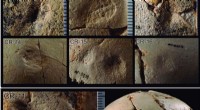
Fossil Records: Teeth are often well-preserved in the fossil record, making them valuable for studying extinct species and understanding evolutionary history. Dental remains can provide direct evidence of ancient organisms, offering glimpses into the teeth of our prehistoric ancestors and extinct branches of the tree of life. By comparing the teeth of extinct species with those of extant species, scientists can gain insights into evolutionary changes and relationships over time.
In summary, teeth serve as essential tools in evolutionary biology and contribute significantly to our understanding of the tree of life. By examining dental anatomy, adaptations, development, and fossil records, scientists can gather evidence of shared ancestry, divergence, and evolutionary relationships among different species, helping to reconstruct the intricate branches of the evolutionary tree.