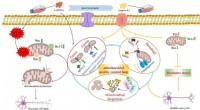
The process of cell movement is regulated by a complex network of signalling pathways that involve various proteins and lipids. These signalling pathways control the extension and retraction of pseudopodia, as well as the adhesion and detachment of cells to surfaces.
Cell adhesion is the process by which cells stick together to form tissues and organs. Cell adhesion is mediated by a variety of molecules, including cadherins, integrins, and selectins. These molecules bind to receptors on neighbouring cells, forming bonds that hold the cells together.
The strength and specificity of cell adhesion are critical for the proper function of tissues and organs. For example, the tight adhesion of cells in the skin is essential for preventing the entry of pathogens, while the looser adhesion of cells in the blood allows for the free flow of immune cells.
Disruptions in cell movement and adhesion can lead to a variety of diseases, including cancer, immune deficiencies, and developmental disorders. Therefore, understanding the molecular mechanisms that regulate these processes is of great importance in both basic biology and medicine.
Here are some additional details about cell movement and adhesion:
Cell movement is driven by the polymerization and depolymerization of actin filaments. Actin filaments are long, thin protein filaments that are found in all eukaryotic cells. When actin filaments polymerize, they form a rigid structure that pushes the cell membrane forward, causing the cell to move. When actin filaments depolymerize, the cell membrane relaxes and the cell stops moving.
Cell adhesion is mediated by a variety of molecules, including cadherins, integrins, and selectins. Cadherins are transmembrane proteins that bind to cadherins on neighbouring cells, forming bonds that hold the cells together. Integrins are transmembrane proteins that bind to extracellular matrix proteins, such as collagen and fibronectin, anchoring the cells to the extracellular matrix. Selectins are transmembrane proteins that bind to carbohydrates on the surface of other cells, mediating cell-cell interactions in the immune system.
The strength and specificity of cell adhesion are regulated by a complex network of signalling pathways. These signalling pathways involve various proteins and lipids that control the expression of adhesion molecules, as well as the activity of enzymes that modify the extracellular matrix.
Disruptions in cell movement and adhesion can lead to a variety of diseases, including cancer, immune deficiencies, and developmental disorders. For example, cancer cells often have mutations that lead to increased cell movement and decreased cell adhesion, which allows them to spread to other parts of the body. Immune deficiencies can be caused by mutations in genes that encode adhesion molecules, which prevents immune cells from binding to and killing pathogens. Developmental disorders can be caused by mutations in genes that encode proteins involved in cell movement and adhesion, which leads to abnormal tissue formation.
Understanding the molecular mechanisms that regulate cell movement and adhesion is of great importance in both basic biology and medicine. By understanding how these processes work, we can gain insights into the development of new treatments for diseases that are caused by disruptions in cell movement and adhesion.