The research team, led by scientists from the University of California, Berkeley, focused on the role of a protein called YAP in regulating the mechanical properties of embryonic tissues. YAP is known to be involved in cell growth and proliferation, but its role in tissue mechanics had not been fully understood.
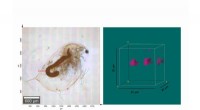
Using advanced imaging techniques and biophysical measurements, the researchers observed that YAP controls the stiffness and fluidity of embryonic tissues through its interactions with the cell's cytoskeleton. By manipulating YAP activity, they were able to alter the physical properties of the tissues and influence their development.
This discovery has important implications for understanding birth defects that arise due to abnormal tissue mechanics. For example, certain birth defects such as cleft lip and palate are associated with defects in tissue stiffness and YAP activity. By targeting the YAP pathway, it may be possible to develop therapies that correct these defects.
Furthermore, this research has potential applications in regenerative medicine. By controlling the mechanical properties of tissues, it may be possible to engineer scaffolds and biomaterials that better support tissue growth and regeneration. This could lead to new treatments for a variety of conditions, including burns, tissue injuries, and organ failure.
Overall, this study provides a deeper understanding of how cells regulate the physical state of embryonic tissues, opening new avenues for research in birth defects and regenerative medicine.