Introduction:
Epigenetic silencing plays a critical role in regulating gene expression during development, cellular differentiation, and disease states. One crucial mechanism by which epigenetic silencing is achieved is through transcription. Transcription, the process of synthesizing RNA from a DNA template, can deliver epigenetic modifications that lead to the repression of gene activity. In this article, we will explore the molecular mechanisms by which transcription mediates epigenetic silencing, focusing on the involvement of RNA polymerase, chromatin remodeling complexes, and non-coding RNAs.
1. RNA Polymerase and Transcription Elongation:
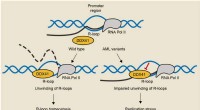
The first step in transcription-mediated epigenetic silencing is the recruitment of RNA polymerase II (Pol II) to the promoter region of a target gene. Pol II is a complex enzyme that drives transcription elongation along the DNA template. However, in some cases, Pol II can pause or stall at specific genomic loci, leading to the formation of transcription elongation complexes (TECs). These paused TECs can recruit chromatin remodeling complexes and other silencing factors, facilitating the establishment of epigenetic modifications.
2. Recruitment of Chromatin Remodeling Complexes:
Paused Pol II complexes can recruit various chromatin remodeling complexes that alter the chromatin structure and accessibility. These complexes utilize ATP hydrolysis to remodel nucleosomes, reposition them along the DNA, or even evict them completely. By altering the nucleosomal organization, chromatin remodeling complexes create a more condensed and repressive chromatin environment, which inhibits the transcription of underlying genes.
3. Histone Modifications and DNA Methylation:
The presence of paused Pol II complexes and the recruitment of chromatin remodeling complexes often result in specific histone modifications associated with gene silencing. Histone methylation marks, such as H3K9me3 and H3K27me3, are deposited by histone methyltransferases recruited to the paused TECs. Additionally, DNA methylation, another key epigenetic modification involved in gene silencing, can be established or reinforced during transcription. DNA methyltransferases can be recruited to the transcribed regions and add methyl groups to CpG dinucleotides, further consolidating the repressive chromatin state.
4. Non-Coding RNAs in Transcriptional Silencing:
Transcription can also lead to the generation of non-coding RNAs (ncRNAs), such as long non-coding RNAs (lncRNAs) and small interfering RNAs (siRNAs). These ncRNAs can play important roles in transcriptional silencing. For instance, lncRNAs can act as guides for chromatin remodeling complexes and recruit them to specific genomic loci. siRNAs, on the other hand, can guide Argonaute proteins to target mRNAs and induce their degradation or translational repression, thereby contributing to gene silencing.
Conclusion:
In summary, transcription plays a crucial role in delivering epigenetic silencing. The recruitment of RNA polymerase II, formation of paused transcription elongation complexes, and subsequent recruitment of chromatin remodeling complexes and histone modifiers establish repressive chromatin environments that prevent gene expression. Additionally, the generation of non-coding RNAs during transcription can further contribute to transcriptional silencing. Understanding the molecular mechanisms by which transcription mediates epigenetic silencing provides valuable insights into gene regulation and has potential implications for therapeutic interventions in diseases associated with aberrant gene expression.