Proteins are essential for the structure and function of cells. They are made up of amino acids, which are linked together by peptide bonds. When proteins are no longer needed, they are broken down by a process called proteolysis.
Proteolysis is carried out by a group of enzymes called proteases. Proteases break down proteins into smaller peptides and amino acids, which can then be recycled by the cell.
The process of proteolysis is essential for the proper function of cells. It helps to maintain the correct balance of proteins in the cell, and it also removes damaged proteins that could be harmful to the cell.
Advanced microscopes have helped scientists to understand the process of proteolysis in great detail. These microscopes allow scientists to see the individual steps of proteolysis, and to track the movement of proteins as they are broken down.
This research has helped to identify the different types of proteases and their roles in the cell. It has also led to the development of new drugs that can inhibit proteases, which could be used to treat diseases such as cancer and arthritis.
Here are some specific examples of how advanced microscopes have helped scientists understand the process of proteolysis:
* Fluorescence microscopy: This type of microscopy uses fluorescent dyes to label proteins. This allows scientists to track the movement of proteins in the cell, and to see how they interact with other proteins.
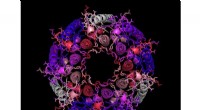
* Electron microscopy: This type of microscopy uses a beam of electrons to create images of cells and molecules. This allows scientists to see the structure of proteins in great detail, and to identify the different types of proteases that are involved in proteolysis.
* Atomic force microscopy: This type of microscopy uses a sharp probe to scan the surface of cells and molecules. This allows scientists to measure the forces that are involved in proteolysis, and to see how the structure of proteins changes as they are broken down.
These are just a few examples of how advanced microscopes have helped scientists to understand the process of proteolysis. This research has led to a greater understanding of how cells work, and it has also led to the development of new drugs that could be used to treat diseases such as cancer and arthritis.