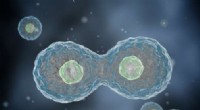
Cells continually make copies of their DNA so that they can then divide. This requires unzipping the DNA double helix and copying each of the two strands as a template for new DNA. The copies are then painstakingly proofread to catch copying mistakes. However, despite all this care, very rarely a piece of DNA mistakenly becomes copied twice, forming an extrachromosomal DNA (ecDNA) fragment.
Cells have ways to degrade these extra copies once they have formed, but if they are not quickly enough degraded, they can cause havoc. In 2013, the Francis Crick team showed that ecDNAs can be stitched back into chromosomal DNA, causing deletions and rearrangements that can contribute to cancer and autoimmune disease.
The researchers discovered that the proteins responsible for initiating copying of the DNA, known as helicases, also provide the first check for ecDNA formation. The helicases can tell if the DNA is already unzipped and so should not be copied, for instance, if the DNA has been accidentally copied twice already.
The team showed that the helicases carry a small chemical modification called a methyl group, which blocks them from initiating copying of the DNA if the DNA is already open. If this fails and copying does start, other proteins bind to the ends of the DNA and rapidly recruit enzymes to destroy it.
The findings help to shed light on some diseases that are caused by mutations in the helicases. For instance, mutations that remove the methyl group are associated with premature ageing, while mutations that prevent binding to the ends of the DNA are implicated in cancer and autoimmune diseases.
Further research will look at whether the proteins involved in detecting and destroying ecDNAs could be harnessed to develop new therapies for cancer and autoimmune disease.
The research was funded by the Francis Crick Institute, Cancer Research UK, the Wellcome Sanger Institute and the Medical Research Council.