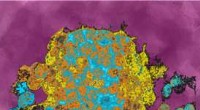
Prochlorococcus, a remarkably successful cyanobacterium, thrives in the vast expanses of the world's oceans, where iron availability is extremely limited. Its ability to adapt and flourish in these challenging conditions has made it the most abundant photosynthetic organism on Earth, playing a critical role in the planet's carbon cycling and oxygen production. Here's how Prochlorococcus manages iron scarcity and achieves its remarkable success:
1. High-Affinity Iron Acquisition Mechanisms:
- Prochlorococcus has evolved specialized mechanisms to acquire iron efficiently from the surrounding seawater. It produces siderophores, small molecules that bind to iron and enhance its solubility, making it more accessible for uptake.
- The organism also possesses specific iron transporters that facilitate the uptake and transport of iron into the cells, ensuring efficient utilization of available iron.
2. Efficient Iron Homeostasis:
- Prochlorococcus allocates iron selectively to essential cellular processes, prioritizing its use for photosynthetic functions.
- It synthesizes specific proteins called ferritins that store iron for future use, preventing iron loss and maintaining intracellular iron homeostasis.
3. Iron-sparing Adaptations:
- To minimize iron requirements, Prochlorococcus has streamlined its photosynthetic machinery. It has reduced the size of its light-harvesting antennae, reducing the need for iron-containing chlorophyll molecules.
- Additionally, it has substituted certain iron-requiring enzymes with alternative iron-independent enzymes, further conserving its limited iron resources.
4. Mixotrophy:
- In extreme conditions where iron availability is exceptionally low, Prochlorococcus exhibits mixotrophic capabilities. It can supplement its energy needs by consuming organic matter, reducing its reliance solely on photosynthesis.
5. Adaptation to Low-Light Environments:
- Prochlorococcus thrives in the dimly lit depths of the oceans, where sunlight is scarce. It has adapted its photosynthetic apparatus to efficiently capture and utilize low levels of light, making it well-suited for these challenging conditions.
6. Rapid Growth and Reproduction:
- Prochlorococcus has a remarkably fast growth rate, enabling it to multiply rapidly and outcompete other phytoplankton in iron-limited environments.
- Its ability to reproduce asexually through binary fission further contributes to its rapid population growth and dominance.
In summary, Prochlorococcus's success in iron-poor waters is attributed to a combination of adaptations, including high-affinity iron acquisition mechanisms, efficient iron homeostasis, iron-sparing strategies, mixotrophy, adaptation to low-light environments, and rapid growth and reproduction. These remarkable traits allow Prochlorococcus to flourish in the vast ocean regions where iron scarcity would otherwise limit the survival of most other photosynthetic organisms. Its prevalence and productivity make it a key player in global carbon cycling and oxygen production, shaping the delicate balance of Earth's ecosystems.