Dengue virus is a mosquito-borne infection that causes flu-like symptoms and, in severe cases, can lead to death. It is a major public health concern, with an estimated 390 million infections worldwide each year.
Now, scientists have uncovered fundamental rules for how dengue virus infects its mosquito and human hosts. The findings, published in the journal Nature, could lead to new ways to prevent and treat dengue fever.
The researchers, from the University of California, Berkeley, used a combination of experiments and mathematical modeling to study how dengue virus interacts with its hosts. They found that the virus uses different strategies to infect mosquitoes and humans.
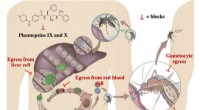
In mosquitoes, the virus replicates in the midgut, which is the stomach-like organ. The virus then spreads to the salivary glands, where it can be transmitted to humans when the mosquito bites.
In humans, the virus replicates in the liver and other organs. The virus can cause a variety of symptoms, including fever, headache, muscle aches, and rash. In severe cases, dengue fever can lead to dengue hemorrhagic fever and dengue shock syndrome, which can be fatal.
The researchers found that the virus's ability to infect mosquitoes and humans is influenced by a number of factors, including the virus strain, the mosquito species, and the human immune response.
They also found that the virus can evolve to become more or less virulent, depending on the environment. For example, the virus may evolve to become more virulent in areas where there are high levels of mosquito-borne transmission.
The findings provide a better understanding of how dengue virus infects its hosts, which could lead to new ways to prevent and treat dengue fever. For example, the researchers suggest that it may be possible to develop vaccines that target the virus's ability to infect mosquitoes or humans.
The findings could also help to improve mosquito control efforts. For example, the researchers found that certain mosquito species are more susceptible to dengue virus infection than others. This information could help to identify areas where mosquito control efforts should be focused.
Dengue fever is a major public health concern, but the new findings provide hope for new ways to prevent and treat the disease.