Evolution is a process that happens over millions of years, but scientists have now found a way to measure how quickly genomes change in real time. By studying the genomes of bacteria that live in extreme environments, researchers have been able to see how their DNA changes over the course of a few generations.
This research is important because it provides a direct measurement of how quickly evolution can happen. It also helps scientists understand how organisms adapt to their environments and how new species are formed.
How the Study Was Done
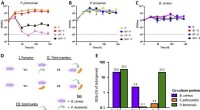
The study was conducted by researchers at the University of California, Berkeley. They studied the genomes of two strains of bacteria that live in the hot springs of Yellowstone National Park. The bacteria, called Thermus aquaticus and Thermus thermophilus, are very similar to each other, but they have evolved different adaptations to their environment.
The researchers grew the bacteria in the laboratory and then sequenced their genomes. They compared the genomes of the two strains and found that they had accumulated a number of mutations over the course of a few generations. These mutations were located in genes that are involved in heat resistance, antibiotic resistance, and other important functions.
The Results
The results of the study showed that the genomes of the two strains of bacteria were changing at a rate of about 1 mutation per 100,000 base pairs per generation. This may not seem like a lot, but it adds up over time. Over the course of a million generations, the genomes of the two strains of bacteria would have accumulated 10,000 mutations. This would be enough to cause the two strains to diverge into two new species.
The Implications of the Study
The study by the University of California, Berkeley researchers provides a direct measurement of how quickly evolution can happen. This research is important because it helps scientists understand how organisms adapt to their environments and how new species are formed.
The study also has implications for human health. By understanding how bacteria evolve, scientists can better develop antibiotics and other treatments for bacterial infections.
Conclusion
Evolution is a process that happens over millions of years, but it can also happen very quickly in response to environmental changes. The study by the University of California, Berkeley researchers provides a direct measurement of how quickly evolution can happen. This research is important because it helps scientists understand how organisms adapt to their environments and how new species are formed.