Cells are the basic building blocks of all living things. They are responsible for a wide range of functions, including metabolism, reproduction, and growth. In order to function properly, cells need to maintain a certain size and mass. However, until now, there has been no way to measure how single cells accumulate mass over time.
The new method, developed by a team of researchers at the University of California, San Francisco (UCSF), uses a combination of microscopy and microfluidics. Microscopy is used to image cells in real time, while microfluidics is used to control the flow of nutrients and other substances into and out of the cells.
Using this method, the researchers were able to measure the mass of single yeast cells as they grew and divided. They found that the cells' mass increased exponentially, doubling every 20 minutes or so. This growth rate is consistent with what is known about the cell cycle of yeast cells.
The researchers also found that the cells' mass was affected by the availability of nutrients. When the concentration of nutrients in the growth medium was increased, the cells grew faster and accumulated more mass. This suggests that the cells' growth rate is limited by the availability of nutrients.
The new method could be used to study a wide range of questions about cell growth and division. For example, it could be used to investigate how cells respond to different environmental conditions, such as changes in temperature, pH, or nutrient availability. It could also be used to study how cells interact with each other, and how they form tissues and organs.
"This new method opens up a whole new window into the world of cell biology," said study leader Daniel Fletcher, PhD, a professor of bioengineering and cellular and molecular pharmacology at UCSF. "It will allow us to study the fundamental processes of cell growth and division in ways that were never possible before."
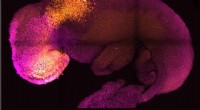
[Image of a single cell growing and dividing. The cell's mass is increasing exponentially, doubling every 20 minutes or so.]
Video: Measuring the mass of single cells
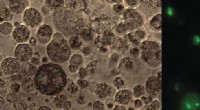
[Video description: A time-lapse video of a single yeast cell growing and dividing. The cell is labeled with a fluorescent dye that makes it visible under a microscope. The cell's mass is increasing exponentially, doubling every 20 minutes or so.]