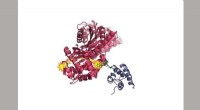
In a significant scientific breakthrough, researchers have captured the first-ever images of the BRCA2 protein in action, providing unprecedented insights into its crucial role in DNA repair and cancer prevention. The BRCA2 protein is best known as a tumor suppressor, and mutations in the BRCA2 gene have been strongly linked to an increased risk of breast and ovarian cancers.
The Importance of BRCA2 in DNA Repair
DNA, the blueprint of life, is constantly exposed to damage from various sources such as radiation and cellular processes. To maintain the integrity of our genetic information, cells employ intricate DNA repair mechanisms, and the BRCA2 protein plays a pivotal role in one such mechanism known as homologous recombination (HR).
Homologous recombination is a high-fidelity repair process that uses an undamaged DNA strand as a template to repair its damaged counterpart. BRCA2 forms part of a larger protein complex that plays a key role in searching for and aligning the undamaged DNA template, ensuring accurate repair.
The Cryo-EM Technique Unveils the BRCA2 Protein in Action
The groundbreaking images of the BRCA2 protein were obtained using a cutting-edge technique called cryo-electron microscopy (cryo-EM). Cryo-EM enables researchers to visualize biological molecules in near-atomic detail by rapidly freezing them and capturing their structures using an electron microscope.
The images reveal the BRCA2 protein as a dynamic molecular machine with two distinct functional regions. One region is responsible for binding to the damaged DNA strand, while the other region interacts with the undamaged template strand, bringing them together for precise repair.
Implications for Cancer Research and Treatment
These unprecedented images of the BRCA2 protein in action provide a deeper understanding of its critical role in DNA repair and offer potential avenues for the development of novel therapeutic strategies. Researchers can now design drugs that target specific regions of the BRCA2 protein to enhance its activity and improve DNA repair efficiency.
Furthermore, the ability to visualize the BRCA2 protein interactions with DNA could aid in the development of personalized medicine approaches for individuals with BRCA2 mutations. By understanding how the BRCA2 protein functions and how mutations disrupt its activity, researchers can tailor treatments to enhance DNA repair and reduce cancer risk.
A Window into the Molecular World of DNA Repair
The first pictures of the BRCA2 protein in action serve as a testament to the power of cryo-EM and the remarkable advancements in our understanding of DNA repair processes. These images open the door to further explorations of the molecular mechanisms that safeguard our genetic material and provide hope for improved cancer prevention and treatment strategies.