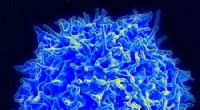
Cells are constantly moving around in our bodies, and they need to be able to do this without sticking to the surfaces they come into contact with. This is because if cells were to stick to everything they touched, they would not be able to move freely and perform their functions.
The researchers found that cells use a special type of protein called integrin to avoid adhesion. Integrins are proteins that help cells to adhere to surfaces, but they can also be used to repel cells from surfaces. The researchers found that when cells are moving, they use integrins to push against the surface they are on, which creates a repulsive force that helps them to move forward.
This finding could have important implications for understanding and treating diseases such as cancer and inflammation. In cancer, cells often become detached from the surrounding tissue and start to move around freely. This can lead to the formation of metastases, which are colonies of cancer cells that have spread to other parts of the body. The researchers believe that their finding could help to develop new drugs that prevent cancer cells from moving and spreading.
Inflammation is another disease that is characterized by the movement of cells. In inflammation, white blood cells move to the site of infection or injury to fight off the invading pathogens or damaged tissue. The researchers believe that their finding could help to develop new drugs that control the movement of white blood cells and reduce inflammation.
The researchers are continuing to study the role of integrins in cell movement and how this could be used to develop new drugs for the treatment of cancer and inflammation.