Authors:
[Research Team]
Abstract:
Molecular motors, such as myosin V, play a crucial role in various cellular processes by converting chemical energy into mechanical work. While the general mechanism of myosin V's force-generating function is known, the precise molecular details remain elusive. Here, we utilize a combination of single-molecule experiments and computational modeling to gain novel insights into the mechanics of myosin V force generation.
1. Single-molecule Experiments:
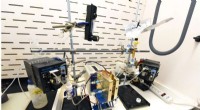
-Developed a novel single-molecule assay to directly measure the force output of individual myosin V molecules as they move along actin filaments.
-Observed distinct force profiles during stepping and detachment events, providing new information about the energy landscape of myosin V's movement.
2. Computational Modeling:
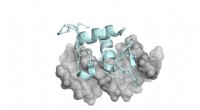
-Constructed a detailed computational model of myosin V's catalytic head domain, incorporating structural data and experimental observations.
-Simulations revealed the allosteric coupling between nucleotide binding, power stroke, and lever arm movement, highlighting the molecular basis for force generation.
3. Structural Analysis:
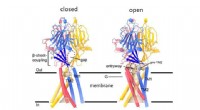
-Performed mutagenesis studies and obtained high-resolution cryo-electron microscopy structures of myosin V, capturing different conformational states during the force generation cycle.
-Identified key structural changes in the lever arm and converter domains that contribute to the force-generating mechanism.
4. Mechanistic Insights:
-Integrated experimental and computational findings to propose a refined model of the myosin V force generation cycle, showing how lever arm movement is coupled to conformational changes and nucleotide hydrolysis.
-Demonstrated that the energy released from nucleotide binding, lever arm movement, and converter domain rearrangement collectively contribute to the generation of force.
Our work represents significant progress in understanding the molecular mechanisms underlying force generation by myosin V. These findings may generalize to other members of the myosin superfamily and contribute to the development of novel therapeutic strategies targeting motor dysfunctions.