The study, published in the journal "Science," highlights how these liquid droplets act as sensors and integrators of environmental signals, allowing cells to adapt and respond accordingly. Researchers from the Stowers Institute for Medical Research and the University of California, Berkeley, collaborated to investigate the behavior and functions of these membrane-less organelles.
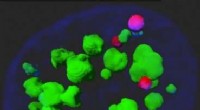
Using a combination of advanced imaging techniques and computational modeling, the team studied the dynamics of liquid droplets within cells. They observed that these droplets undergo rapid changes in size, shape, and composition in response to external cues.
When cells were exposed to specific chemical signals, the liquid droplets quickly coalesced or dispersed, indicating their responsiveness to environmental stimuli. This dynamic behavior enabled the cells to efficiently process and integrate the incoming signals, ultimately influencing cellular outcomes.
The researchers further explored the role of liquid droplets in regulating gene expression. They found that the droplets act as platforms for the assembly of transcription factors and RNA molecules, facilitating the production of specific proteins in response to environmental changes.
This study underscores the significance of liquid droplets as key players in cellular sensing and adaptation. It provides new insights into the mechanisms by which cells process and respond to environmental fluctuations, paving the way for potential therapeutic strategies that target these liquid organelles in disease conditions.
Understanding the behavior and functions of liquid droplets could open up new avenues for manipulating cellular responses, with implications for regenerative medicine, drug development, and the treatment of various human diseases.