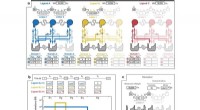
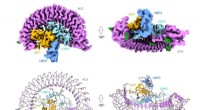
Attachment: The motor protein first binds to a specific cargo or track within the network. The attachment is mediated by specific molecular interactions, such as protein-protein or protein-cargo binding.
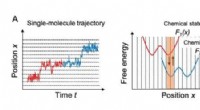
Brownian motion: Once attached, the motor undergoes Brownian motion, which refers to the random movement of particles due to thermal energy. This movement allows the motor to explore the surrounding environment and encounter potential tracks or obstacles.
Stepping: When the motor encounters a suitable track, it undergoes a stepping motion. This involves a conformational change in the motor protein, causing it to move along the track in a specific direction. The stepping motion is driven by the hydrolysis of ATP, the cellular energy currency.
Processive movement: Processive motors are capable of taking multiple consecutive steps along the track without detaching. This allows them to move over long distances efficiently. Each step takes place in a specific direction, dictated by the motor's structural polarity.
Regulation: The movement of molecular motors can be regulated by various cellular factors. These include binding of regulatory proteins, changes in ATP concentration, and post-translational modifications. Regulation ensures that motors function in a coordinated manner and respond to cellular signals.
Interaction with the network: The network within which the motor moves can also influence its behavior. For example, the density and organization of the tracks, as well as the presence of obstacles, can affect the motor's movement patterns and efficiency.
By understanding these steps and the underlying mechanisms, we gain insights into how molecular motors navigate and function within complex cellular environments.