Home
Chemistry
Astronomy
Energy
Nature
Biology
Physics
Electronics
Science
>>
Science Discoveries
> >>
Astronomy
Simultaneous X‑ray and Infrared Observations Reveal Time Lag at the Galactic Center
High‑Resolution Imaging Reveals Intricate Jet Structure in Blazar S5 0716+714
NASA Announces Atmospheric Waves Experiment to Monitor Space Weather from the International Space Station
Star Remnants Revealed: A Stunning Image of NGC 300
SpaceX Launches Israel’s Lunar Lander Toward the Moon
Solar Storm Illuminates Iceland: Stunning Night Sky Photo by Ollie Taylor
Virgin Galactic's VSS Unity Reaches Space in Second Test Flight
TESS Discovers Ultra‑Short‑Period Hot Earth: 11‑Hour Orbit Exoplanet
Unveiling the Jet‑Cocoon Dynamics of a Gravitational Wave Neutron Star Merger
Hayabusa2 Achieves Successful Touchdown on Asteroid Ryugu, Advancing Life Origins Research
NASA Approves SpaceX Crew Dragon Test Launch to the International Space Station
New Horizons Captures Ultra-High-Resolution Images of Ultima Thule
Curiosity Rover Resumes Normal Operations After Reset
UAE Announces First Astronaut Mission to ISS in September
SNoOPI: Innovative CubeSat for Accurate Soil Moisture & Snow Measurement
Penn State's Habitable Zone Planet Finder Enhances Detection of Planets Around Cool Stars
NASA Astronauts Poised for ISS Mission After Previous Launch Failure
CU Boulder Leads NASA- NOAA Grant to Enhance Solar Wind Modeling
Evidence of Ancient Martian Water Flow Revealed by ESA's Mars Express
Hayabusa2: Japan’s Probe Prepares for Asteroid Landing to Uncover Earth’s Origins
Israel Launches First Private Lunar Mission from Florida with SpaceX
Japan's Hayabusa2 Set to Land on Asteroid Ryugu – Update
LMC S154 Revealed as First Symbiotic Recurrent Nova in the Large Magellanic Cloud
NASA‑Funded Research Unveils DNA‑Like Molecule to Accelerate Search for Alien Life
Hera Mission Expands: Planning an Additional Asteroid Flyby
NASA's Anne McClain and the Columbus Lab: Advancing Microgravity Science with Circadian Sensors
Tracing the Moon's Water: Origins and Where It Went
New Discovery Reveals How Cosmic Dust Forms in Supernova Explosions
NASA Demonstrates the Moon as a Natural Chemical Factory for Water Production
Mars Weather Update: Cool Temperatures and Dust Devil Forecast
Earth's Atmosphere Extends to the Moon and Beyond
Neptune’s Newest, Smallest Moon Likely Fragment of a Larger Companion
NASA NuSTAR Reveals Bright X‑ray Sources in Colliding Whirlpool Galaxies
Russia Successfully Launches Egyptian Telecom Satellite into Orbit
NASA Demonstrates Innovative X‑Ray Space Communication on the ISS
Groundbreaking Earth Test Validates Novel Life‑Detection Method for Future Exoplanet Exploration
Total
43966
-Science
FirstPage
PreviousPage
NextPage
LastPage
CurrentPage:
1035
/1222
36
-Science/Page Goto:
1
1029
1030
1031
1032
1033
1034
1035
1036
1037
1038
1039
1040
1041
Science Discoveries
Chemistry
Astronomy
Energy
Nature
Biology
Physics
Electronics
Geology
Solar Eclipse
Math
other
Nanotechnology
Astronomy
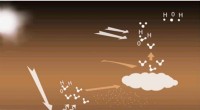
Scientists Find Martian Water Vanishes Faster Than Predicted
NASA Launches Ground Station Advancing Laser Communications
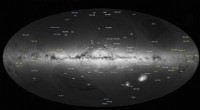
Unveiling the Most Detailed 3‑D Sky Map of the Milky Way’s 100 Billion Stars
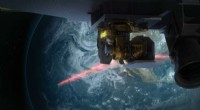
Spacewalk Extends Life of AMS-02 Spectrometer on the ISS
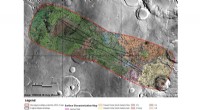
ESA-Roscosmos Selects Oxia Planum as ExoMars Rover Landing Site
Russian Cosmonauts Play Chess with Grandmaster, Achieve a Draw in Space
Celebrating 20 Years on the ISS: A Testament to Global Cooperation
|
Geology
|
Math
|
Solar Eclipse
Science Discoveries © www.scienceaq.com